

The internal valve in a faucet determines how the 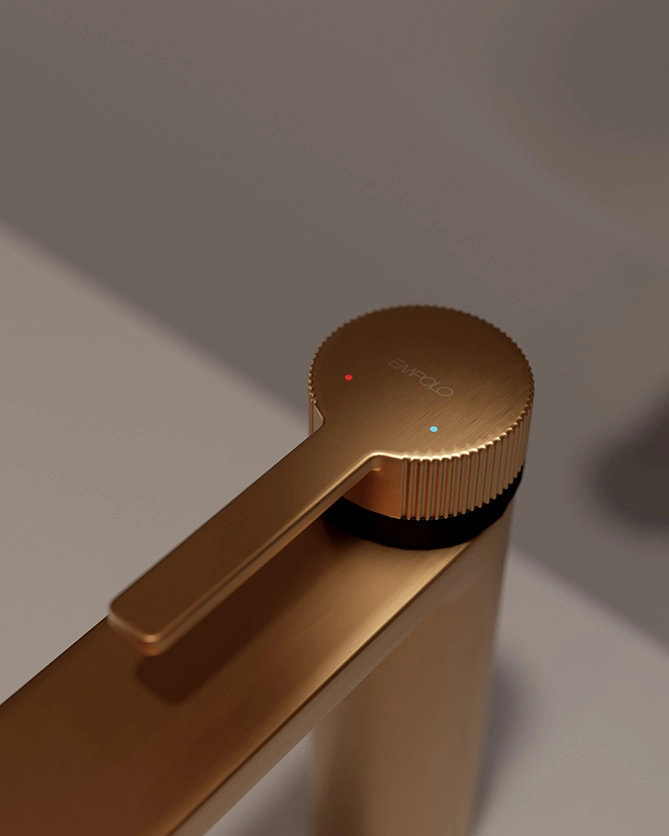 handle of the faucet operates, how well hot and cold water mix, how well the outlet of the faucet is sealed, and how easy it is to repair the faucet. The decision on which type of valve to use is based on several factors, including the intended use of the faucet, the quality of water available to the faucet, the accessibility for maintenance of the faucet, and the availability of repair parts for the faucet.
Not all basin valves are suitable for kitchens and concealed shower applications. This guide outlines options for residential, hospitality, and commercial applications.
What Does a Faucet Valve Do, and Why Does the Type Matter?
The valve controls the opening and closing of the waterways within the faucet. In mixer taps, the valve also regulates the hot-to-cold ratio. The design of the valve affects various factors, including the amount of handle rotation required to open and close the tap, the way the temperature changes, the potential for leakage, and the ease of maintenance and repair.
What Is the Difference Between a Faucet Valve, Cartridge, and Shut-Off Valve?
A faucet valve is the mechanism that controls water at the fixture. A cartridge is a removable assembly that may contain ceramic discs, ports, seals, and a stem. The terms overlap, but they are not identical.
A shut-off valve is provided in the supply line, usually below the basin, and can be shut off before starting any maintenance. When purchasing a new cartridge, it is best to provide the model number, diameter, stem type, locating pins, and handle type rather than ordering a faucet valve.
How Do Faucet Valve Types Affect Leaks, Handle Control, and Maintenance?
Many ceramic-disc mechanisms use two precision-lapped discs, while compression taps press a resilient washer against a valve seat and ball-type faucets rotate a ported ball to control water flow and mixing.
These differences affect:
- Handle control: Quarter-turn types operate faster than multi-turn compression taps.
- Wear points: Washers, O-rings, seats, and even very hard ceramic surfaces can all have different failure points.
- Repairs: A cartridge is usually replaced as a complete unit. A compression tap may require replacement of the sealing washer or stem O-ring or packing, while a worn valve seat may need resurfacing or replacement.
Any mechanism can be damaged by sediment, scale, or installation debris. Flush the supply lines before installation, and consider upstream filtration where the water contains abrasive particles or heavy sediment.
Which Faucet Valve Types Should You Compare?
Ceramic Disc Valves
Ceramic disc valves use two closely fitting ceramic plates to control water flow. In operation, the handle is moved to align or shut off ports. Operation of the shut-off is not by means of a rubber washer, so it offers the benefits of short handle travel and fine adjustment.
Modern basin and kitchen mixers use this type of cartridge. If hard debris gets stuck between the discs, it can score the surfaces where the discs meet, thus causing leakage. As usual, clean supply lines are critical.
Cartridge Valves
A cartridge is a replaceable control unit used in single-handle or two-handle faucets. It may contain ceramic discs or other sealing components.
Although cartridges are designed in a modular fashion to make servicing easier, similar-looking cartridges can differ in height and diameter, have different stem shapes, turn in opposite directions, and use completely different locating features. Appearance is not enough to be sure of exact compatibility.
Ball Valves
A ball-type faucet has a rotating ball with holes in it connected to the hot and cold water inlets. It has one lever to control the flow of water and to change the temperature.
Although it offers flexible movement, the design uses seals, springs, and O-rings. Wear will cause dripping from the handle or spout. Ball systems are repairable using service kits, although they are less common in newer ranges.
Compression and Jumper Valves
A compression valve has a threaded stem that presses a washer against the valve seat. The handle typically requires several turns to open or close the waterway, and the mechanism is generally straightforward to service.
A jumper valve is a related design in which the washer sits on a movable jumper. This can reduce twisting, but the tap still depends on a soft seal that wears over time.
These types of mechanisms are best suited to traditional taps and markets where washers and seat tools are generally available. They are not suited to markets and applications where users expect quarter-turn control.
How Do Ceramic Disc Valves Compare with Cartridge and Jumper Valves?
Ceramic Disc Valve vs Cartridge Valve
| Selection point | Ceramic disc mechanism | Replaceable cartridge format |
| Describes | Internal sealing technology | Complete removable unit |
| Main benefit | Smooth control and low washer wear | Faster servicing by replacing the complete unit |
| Main risk | Damage from abrasive debris | Model-specific compatibility |
| Verify | Disc quality and clean water | Size, stem, rotation, and spare supply |
The useful procurement question is whether the cartridge uses ceramic discs and whether the same specification can be supplied throughout the maintenance period.
Jumper Valve vs Ceramic Disc Valve
Most standard jumper valves require several turns to open and utilize a washer to form a seal against a seat. A ceramic disc unit, on the other hand, reaches full flow very quickly with very little handle movement.
If traditional styling, simple local repair, and inexpensive washers are important to you, then a jumper design is the better choice. If smooth operation and a reduced need for washer replacement are more important, then a ceramic-disc mechanism is the better choice.
Both valve types can be affected by hard water and debris. Mineral scale may restrict valve movement, while sediment can damage sealing surfaces or block narrow waterways. Aerators can also become clogged independently of the valve. For this reason, water-quality assessment and maintenance planning are more reliable than broad claims that a faucet is “hard-water resistant”.
How Do You Choose Faucet Valve Types by Application?
Best Faucet Valve Types for Kitchen Faucets
Products installed in the kitchen are frequently used with one hand. A single-lever ceramic cartridge is a simple yet efficient solution to control water flow and temperature. High-spout and pull-out faucet designs, in particular, can have very compact internal construction.
Check the operating angle, cartridge diameter, handle clearance, and replacement access. Buyers should therefore confirm specifications by model rather than assume an entire collection uses one component.
Best Faucet Valve Types for Bathroom Basin Faucets
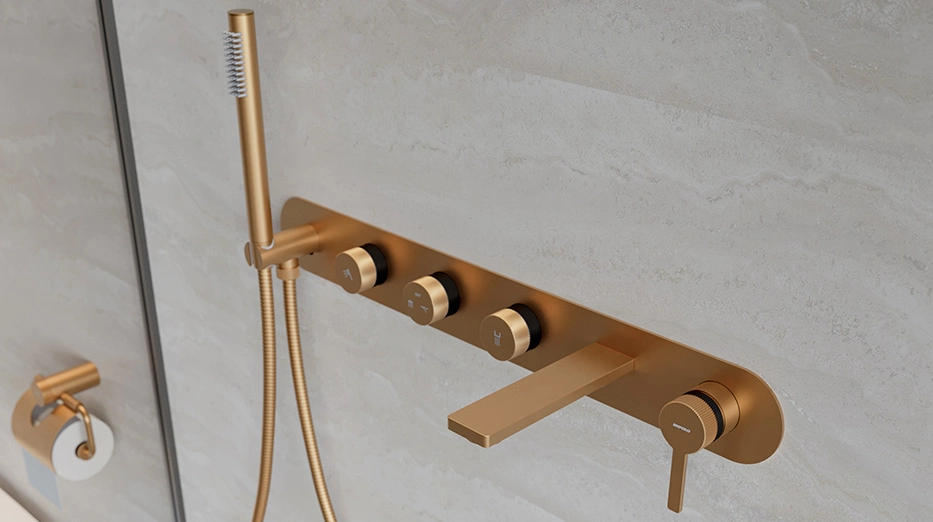
Single-lever basin mixers are often fitted with a single mixing cartridge. Two-handle and three-hole faucets may use separate hot- and cold-water valve units. Wall-mounted faucets require more planning as access is difficult after the wall finish has been completed.
Apartment complexes and hotels may benefit more from cartridge standardization than from using many different valve mechanisms. Using compatible faucet cartridges across multiple models simplifies technician training and reduces the number of spare parts that must be held in inventory.
Selection scenario: A hotel buyer should check whether the cartridge can be removed from above, whether hot and cold units are clearly identified, and whether replacements will remain available.
Choosing Shower Valves for Temperature and Pressure Control
A pressure-balance valve responds to supply-pressure changes to reduce sudden temperature shifts. A thermostatic valve regulates mixed-water temperature where consistent shower comfort is important.
Concealed systems may also need a diverter for a hand shower, overhead shower, or bath spout. The valve body, cartridge, trim, and outlet arrangement must work as one system.
Please check the number of functions, access to the concealed box, the outlet sequence, and the availability of spare parts for the product.
EMPOLO provides brass thermostatic shower mixers with ceramic cartridges in both concealed and exposed versions.
What Should Buyers Check Before Choosing a Faucet Valve?
Evaluate the valve as part of the complete faucet.
- Define the application and expected use frequency.
- Confirm the control format: single-lever or two-handle.
- Record cartridge size, stem shape, operating angle, inlet layout, and pressure requirements.
- Review sediment, scale, pressure variation, and hot-water conditions.
- Check whether the cartridge can be removed without damaging the wall, countertop, or trim.
- Confirm long-term availability of cartridges, aerators, seals, and hoses.
- Review pressure testing, leakage testing, material control, and market certifications.
For larger multi-unit orders, EMPOLO is also able to maintain consistency in production. The products are manufactured entirely in-house through casting, CNC machining, polishing, plating, and assembly, followed by pressure and leakage testing. In addition to the wide range of products, the company also offers replacement cartridges as well as accessories.
Choose between user comfort and serviceability. A highly complex mechanism is not of much value when it comes to finding the right spare part for future repairs.

FAQ
Q: What is the most durable type of faucet valve?
A: A well-engineered ceramic disc mechanism is probably one of the most durable shut-off technologies, as shut-off is not dependent upon a rubber washer failing. As with all technologies, however, the performance of the mechanism is affected by the water being clean, the quality of the installation, the operational demands placed upon the mechanism, and the quality of the cartridges supplied for the mechanism.
Q: Is a ceramic disc valve better than a cartridge valve?
A: These two categories are not mutually exclusive. A removable cartridge can contain ceramic discs, so compare the sealing technology, cartridge dimensions, stem configuration, rotation direction, compatibility with the faucet model, and availability of replacement parts.
Q: How do I know what type of bathroom faucet valve I have?
A: Handle travel provides an initial clue but is not sufficient for positive identification. A handle that turns several full rotations usually indicates a compression or jumper-type mechanism, while a quarter-turn handle often indicates a ceramic-disc valve. For confirmation, shut off the water, remove the handle or cartridge, and compare the model number, overall dimensions, stem profile or spline, locating features, and rotation direction.
Q: What is the difference between a jumper valve and a ceramic disc valve?
A: A jumper valve is a compression-type mechanism in which a replaceable washer is mounted on a movable jumper and seals against the valve seat. It normally requires several turns of the handle to open or close. A ceramic-disc valve controls flow with sliding ceramic surfaces and usually requires only a quarter turn or limited handle travel. Jumper valves are generally simple to repair, while ceramic-disc valves reduce the need for routine washer replacement.